
Volga Lake Vineyard
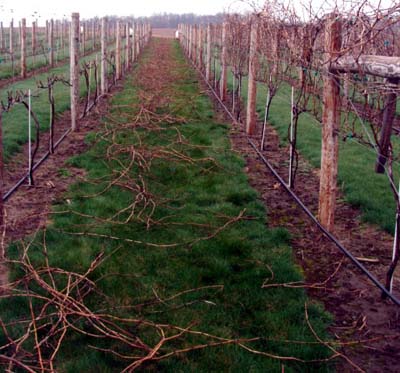
Pruning of our Marquette Grapevines.
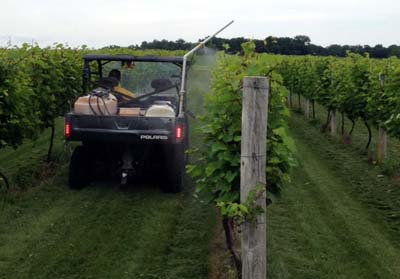
Spraying
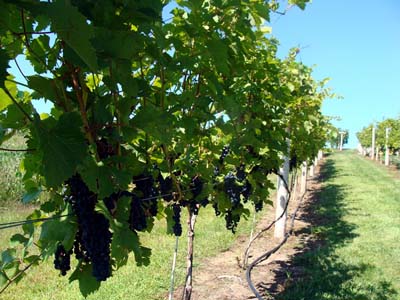
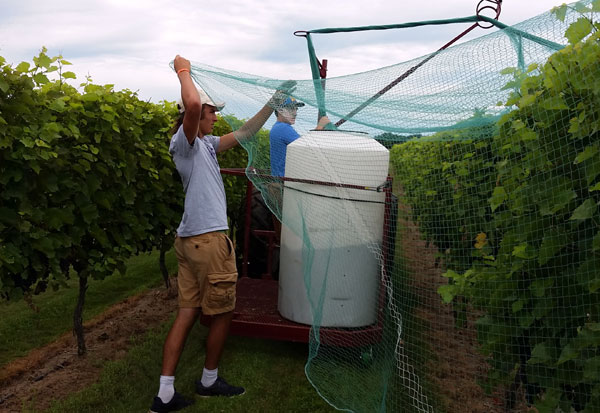
Netting the vines in the Fall of the Year.
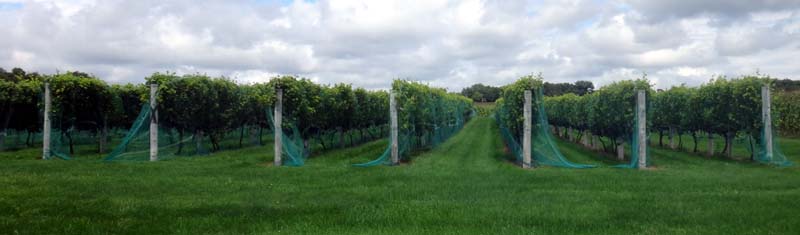
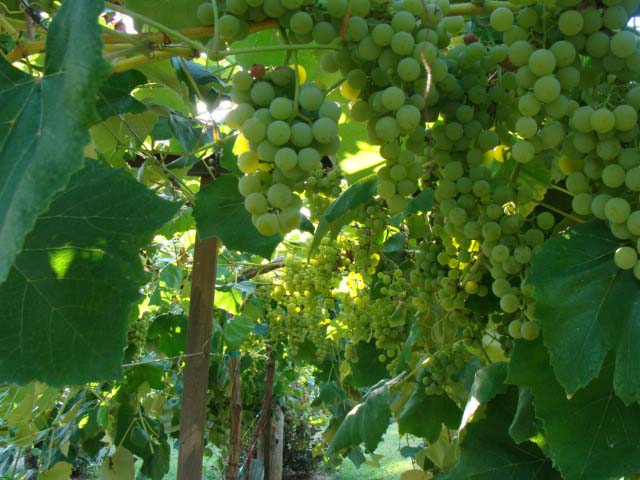
Our Grapes
 .
.
Edelweiss
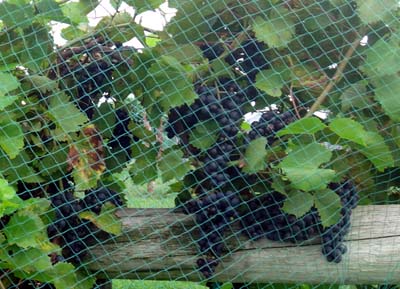 |
MarquetteMarquette is a cousin of Frontenac and grandson of Pinot noir. It originated from a cross of MN 1094, a complex hybrid of V. riparia, V. vinifera, and other Vitis species, with Ravat 262. Viticulturally, Marquette is outstanding. Resistance to downy mildew, powdery mildew, and black rot has been very good. Its open, orderly growth habit makes vine canopy management efficient.Wine ProfileMarquette's high sugar and moderate acidity make it very manageable in the winery. Finished wines are complex, with attractive ruby color, pronounced tannins, and desirable notes of cherry, berry, black pepper, and spice on both nose and palate. As a red wine, Marquette represents a new standard in cold hardy viticulture and enology. |
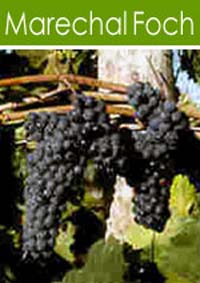 |
Marechal FochRed wine. Hardy to -25 F. Becoming a popular choice for organic growers in some parts of the country. Good disease resistance to downy mildew and powdery mildew. Foch is very versatile in the winery, making serious wines from roses to Burgundian reds and blends depending on its ripeness. Ripens early to mid season. Selected by Kuhlmann. |
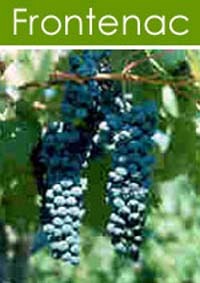 |
FrontenacFrontenac reflects the best characteristics of its parents, V. riparia 89 and the French hybrid Landot 4511. This vine has borne a full crop after temperatures as low as -33ºF. It's very disease resistant, with near-immunity to downy mildew. Frontenac is a consistently heavy producer, with small, black berries in medium to large clusters.Wine ProfileFrontenac's deep garnet color complements its distinctive cherry aroma and inviting palate of blackberry, black currant, and plum. This versatile grape can be made into a variety of wine styles, including rosé, red, and port. |
Marquette Vineyard
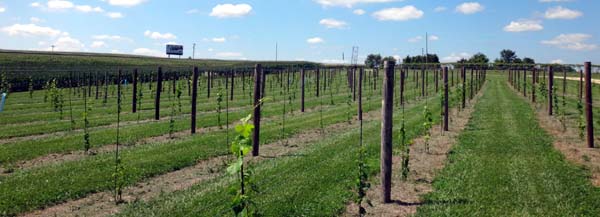
We have started a second vineyard located 4 miles west of the winery on Highway 18. The grapes grown here will go into our two newest wines, Outstanding Red and Outstanding White.
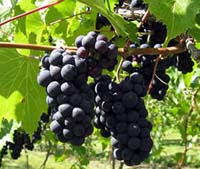
Outstanding Red will be produced from Petite Pearl grapes. Petite Pearl is a relatively new variety developed by Tom Plocher, an eminent northern climate viticulturist, grape breeder, and author. This red grape variety is known to be cold hearty down to -32F, highly disease resistant and reliabally ripens with to brix (22.5 - 24), low Titratable Acidity ( 7 g/L) with a pH in the 3.4 range.
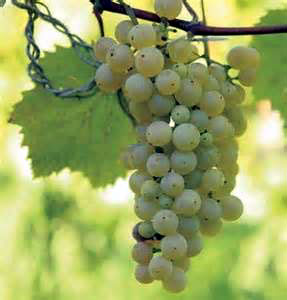
Outstanding White is made from the Brianna grape. Brianna can produce a nicely balanced, off dry white wine with a fruity nose and apricot, peach, pineapple, and honey flavors. Recently interest has grown in this cultivar, and Iowa’s wineries are poised to create new and unique wines from this grape.
|
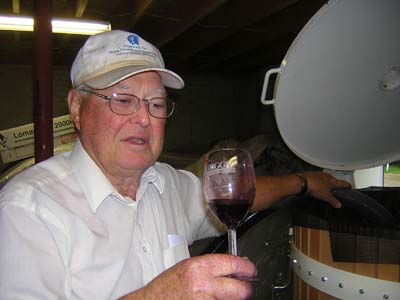
Our Grape Growing Partners
We cannot do it all. Therefore we partner with select grape growers in the area to supply us with only the highest quality grapes.
Our thanks go out the the following growers that we rely on every year to produce the kind of quality fruit we require. We would not be where we are today without their hard work and dedication.
| Grower | Vineyard Location | Varieties |
| Jeff & Mary Aderman | Viroquoa Wisconsin | Frontenac Gris, La Crescent |
| Mike Egebrecht | Genoa Wisconsin | Marquette, Edelweiss |
| Josh Franzen | Decorah, Iowa | Marechal Foch |


